
Imagine a history class where students don’t just read about ancient Rome—they walk through the Colosseum, hear the roar of the crowd, and inspect the stonework with their own eyes. Picture a biology lesson where learners shrink to the size of a red blood cell and navigate the human circulatory system. This isn’t science fiction. It’s happening in classrooms right now, powered by virtual reality (VR).
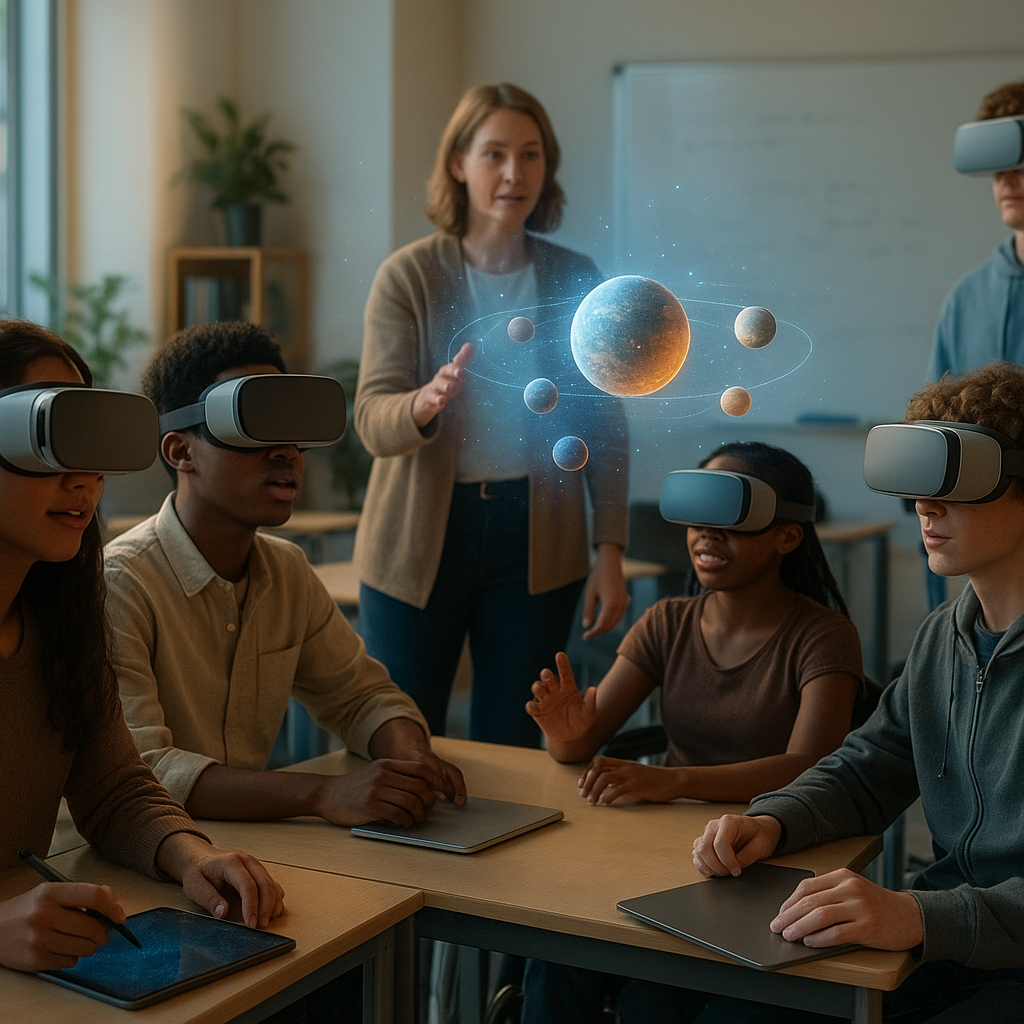
Virtual reality in education has moved beyond the novelty stage. Schools, universities, and training centers worldwide are integrating immersive technology into their curricula, and the results are reshaping how we think about teaching and learning. This article explores how VR is transforming modern education, the benefits it offers, the challenges it presents, and what the future holds for immersive learning.
What Is Virtual Reality in Education?
Virtual reality is a computer-generated simulation that immerses users in a three-dimensional environment. Using a VR headset, learners can interact with digital worlds that feel remarkably real. In an educational context, VR serves as a powerful tool that bridges the gap between theoretical knowledge and practical experience.
Unlike passive learning methods—reading textbooks or watching videos—VR places students inside the subject matter. A student studying marine biology can explore a coral reef. A medical student can practice a surgical procedure. An engineering student can walk through a virtual prototype of a bridge they designed. The technology creates experiential learning opportunities that were previously impossible, expensive, or dangerous to replicate in real life.
How Is VR Being Used in Classrooms Today?
VR adoption in education spans every level, from elementary schools to graduate programs and corporate training. Here are some of the most impactful applications currently in use.
Virtual Field Trips
Geography and budget constraints no longer limit where students can go. Platforms like Google Expeditions (before its discontinuation, its model inspired many successors) paved the way for virtual field trips to the Great Wall of China, the International Space Station, and the depths of the ocean. A 2023 report from Statista estimated that the global VR in education market would surpass $13 billion by 2026, driven largely by demand for immersive field trip experiences.
These virtual excursions do more than entertain. A study published in the Journal of Educational Computing Research found that students who took VR field trips demonstrated significantly better recall and engagement compared to those who learned the same material through traditional slideshows.
Science and Medical Training
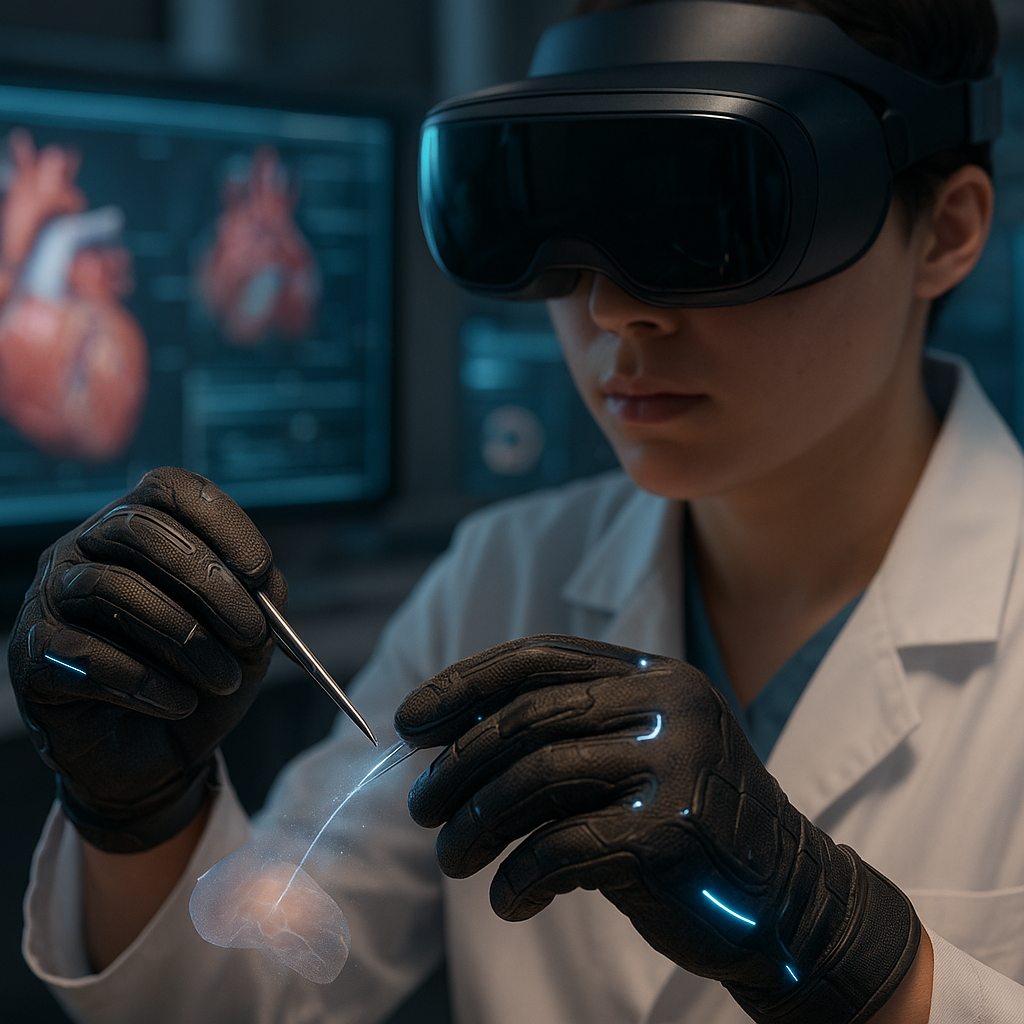
VR has made perhaps its most dramatic impact in medical education. Institutions like Stanford University and the University of California, Los Angeles (UCLA) use VR simulations to train future surgeons. Platforms such as Osso VR and FundamentalVR allow students to rehearse complex procedures in a risk-free environment, receiving real-time feedback on their technique.
The numbers support this approach. Research from the University of Maryland found that participants learning through immersive VR scored an average of 8.8% higher on recall tests compared to those using desktop-based learning. In surgical training specifically, a UCLA study found that VR-trained surgeons completed procedures 20% faster and made fewer errors than their traditionally trained counterparts.
STEM Education
Abstract concepts in science, technology, engineering, and math become tangible in VR. Students can manipulate molecular structures, visualize electromagnetic fields, or explore mathematical functions as three-dimensional objects. Tools like Labster offer virtual science laboratories where students conduct experiments that would be too costly or hazardous in a physical lab.
Language Learning and Cultural Immersion
Learning a new language is most effective when students are immersed in the culture and context. VR apps like MondlyVR and ImmerseMe place learners in realistic scenarios—ordering food at a Parisian café, navigating a Tokyo subway station, or negotiating at a Mexican market. This contextual learning accelerates fluency and builds cultural understanding simultaneously.
Special Education and Accessibility
VR offers unique advantages for students with disabilities or learning differences. Children on the autism spectrum can practice social interactions in controlled, low-pressure virtual environments. Students with physical disabilities can participate in activities that would be inaccessible in the real world. The Floreo platform, for example, has been used in clinical studies to help autistic learners develop social and communication skills.
What Are the Benefits of Virtual Reality in Education?
The growing body of research on VR in education points to several compelling advantages.
Enhanced Engagement and Motivation
Let’s be honest—keeping students engaged is one of education’s greatest challenges. VR tackles this head-on. A 2020 study by PwC found that VR learners were 4 times more focused than their e-learning counterparts and 1.5 times more focused than classroom learners. When students are inside a virtual world, distractions fade away. The immersive nature of the medium commands attention in a way that a textbook simply cannot.
Improved Retention and Understanding
Learning by doing has always been more effective than learning by listening. VR takes this principle to its logical extreme. The same PwC study found that VR learners were 275% more confident in applying skills learned after training and completed their training 4 times faster than classroom learners. The multi-sensory nature of VR—combining visual, auditory, and sometimes haptic feedback—creates stronger memory encoding.
Safe Learning Environments
Mistakes are essential to learning, but in some fields, mistakes carry real risks. VR eliminates this problem. A chemistry student can mix volatile compounds without an explosion. An aviation student can practice emergency landings without endangering lives. A medical student can attempt a difficult procedure without harming a patient. This freedom to fail—and learn from failure—is invaluable.
Personalized Learning at Scale
VR platforms can adapt to individual learning speeds and styles. A student who needs more time on a concept can repeat a simulation without holding back the class. Advanced learners can skip ahead to more challenging scenarios. This level of personalization, delivered consistently across an entire student body, addresses one of education’s most persistent challenges. Much like machine learning improves personalized recommendations in consumer apps, adaptive VR systems tailor content to each learner’s progress.
What Are the Challenges and Barriers of VR in Education?
Despite its promise, VR in education is not without significant hurdles. Understanding these barriers is essential for educators and administrators considering adoption.
Cost and Infrastructure
High-quality VR headsets, powerful computers to run them, and reliable Wi-Fi networks represent a substantial investment. While standalone headsets like the Meta Quest series have brought prices down considerably (starting around $300), equipping an entire classroom still costs thousands of dollars. Schools in underfunded districts face a digital divide that VR could widen rather than close.
Health and Safety Concerns
Motion sickness, eye strain, and disorientation affect some VR users, particularly during extended sessions. The American Academy of Ophthalmology recommends taking regular breaks during VR use. For younger children, there are additional concerns about the effects of prolonged screen time and immersive stimulation on developing brains. Most VR manufacturers recommend their devices for users aged 13 and older, though educational platforms designed for younger children often use shorter sessions.
Teacher Training and Technical Support
Technology is only as effective as the person using it. Many teachers have not received adequate training in VR integration, and the learning curve can be steep. A survey by the EDUCAUSE Review found that only 33% of faculty felt adequately prepared to incorporate emerging technologies into their teaching. Without proper professional development and ongoing technical support, even the best VR hardware collects dust in a storage closet.
Content Quality and Curriculum Alignment
Not all VR educational content is created equal. Some applications prioritize spectacle over substance, offering impressive visuals without meaningful learning outcomes. Finding VR experiences that align with specific curriculum standards—whether Common Core, NGSS, or state-specific frameworks—remains a challenge for many educators.
How Can Schools Successfully Implement VR Technology?
For schools and districts ready to explore VR, a thoughtful implementation strategy makes the difference between a transformative tool and an expensive gimmick.
- Start with clear learning objectives. Don’t adopt VR for its own sake. Identify specific learning outcomes that VR can address more effectively than existing methods.
- Begin with a pilot program. Test VR with a small group of teachers and students before a full rollout. Gather feedback, identify pain points, and refine your approach.
- Invest in teacher training. Allocate budget and time for professional development. Teachers need hands-on practice with the technology and guidance on pedagogical integration.
- Choose curriculum-aligned content. Evaluate VR applications against your existing standards and learning goals. Platforms like ClassVR, Nearpod VR, and ENGAGE offer content specifically designed for classroom use.
- Plan for equity. Ensure all students have access to VR experiences, not just those in advanced or well-funded programs. Consider shared headset carts, scheduled lab time, and rotational models.
- Measure outcomes. Track student performance, engagement metrics, and feedback to evaluate whether VR is delivering on its promise. Use data to inform future decisions.
What Does the Future of VR in Education Look Like?
The trajectory of VR in education points toward deeper integration and more sophisticated experiences. Several trends are worth watching.
Haptic feedback technology is advancing rapidly, adding the sense of touch to virtual environments. Future medical students will not only see a virtual heart but feel its texture and resistance during a simulated procedure.
Artificial intelligence integration will enable VR environments that respond dynamically to each learner’s needs, adjusting difficulty, providing personalized coaching, and generating unique scenarios on the fly.
Collaborative virtual classrooms are emerging as a standard feature, allowing students from different schools, cities, or countries to learn together in shared virtual spaces. This has profound implications for remote learning and global education access.
The concept of the metaverse—persistent, interconnected virtual worlds—could eventually give rise to entire virtual campuses where students attend lectures, collaborate on projects, and socialize, all within immersive digital environments. While the metaverse hype has cooled since its 2021-2022 peak, the underlying technology continues to mature quietly in educational settings.
Frequently Asked Questions About VR in Education
Is virtual reality effective for learning?
Yes, when used appropriately. Multiple studies demonstrate that VR improves engagement, retention, and skill transfer compared to traditional methods. However, effectiveness depends on the quality of the content, the alignment with learning objectives, and proper instructional design. VR works best as a complement to—not a replacement for—effective teaching.
What age group benefits most from VR learning?
VR shows benefits across all age groups, but most research has focused on middle school through adult learners. Middle and high school students tend to adapt quickly to the technology and show strong engagement. Medical and professional training programs at the university level have demonstrated some of the most measurable outcomes.
How much does it cost to implement VR in a classroom?
Costs vary widely. A basic setup with standalone headsets like the Meta Quest 3 (approximately $500 per unit) and free or low-cost educational apps can start around $5,000 to $10,000 for a classroom set. More advanced setups with PC-tethered headsets, custom content development, and dedicated VR labs can exceed $50,000. Many schools begin with a small number of shared devices and scale based on results.
Conclusion
Virtual reality is not a passing trend in education—it’s a fundamental shift in how we create and deliver learning experiences. From virtual field trips that transport students across the globe to surgical simulations that save lives, VR is proving that immersive technology can deepen understanding, boost engagement, and democratize access to experiences that were once reserved for a privileged few.
The challenges are real. Cost, training, health considerations, and content quality all require careful attention. But as hardware becomes more affordable, content libraries expand, and evidence of effectiveness accumulates, VR’s role in education will only grow. The classrooms of tomorrow will look very different from the ones we remember—and virtual reality will be a major reason why.